Introduction #
Exclusion refers to sealing up a structure to prevent pests from entering. In Massey’s Pest Prevention Program, products designed to prevent pest entry and eliminate harborage sites should be utilized prior to the use of any outdoor chemicals. Because most pests originate outdoors, it’s more environmentally responsible to block these pests from entering structures thus eliminating the need to use residual materials or baits indoors. Exclusion is our primary emphasis on every Initial Pest Prevention treatment.
The most common methods we use to seal out pests include caulk, expandable foam, screen, hardware cloth, and copper Stuf-Fit. Use of these materials will be discussed below in the exclusion protocols. When weather gets cooler from December through February, insect activity drastically decreases but rodent activity increases. We place a heavy emphasis on exclusion of rodents and all other pests during these months when more time can be spent ensuring structures are well sealed.
Treatment Protocols #
Caulk #
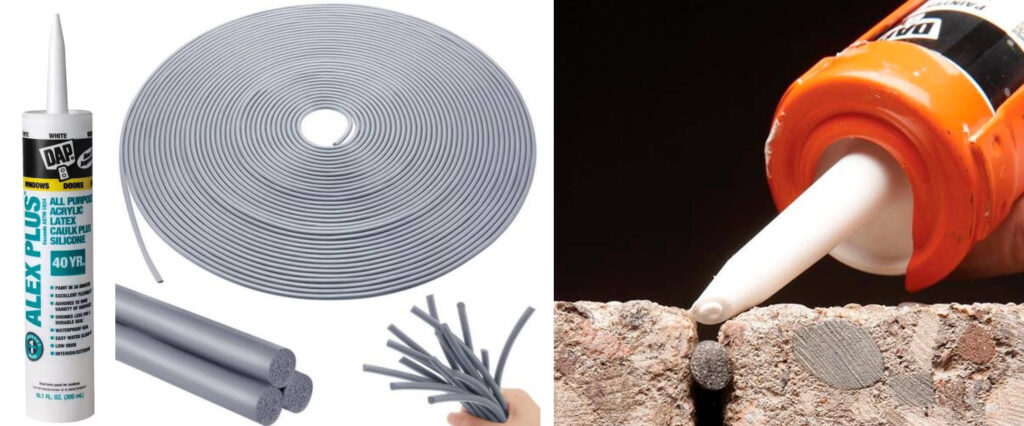
FOR GAPS NO WIDER THAN ¼ INCH: We generally use clear Alex Plus (siliconized acrylic latex paintable) caulk. The treatment protocol starts with dusting the void to be caulked:
- Dust the void to be caulked to ensure no pests are breeding inside the gap/void
- Clean the surface to be caulked of dirt and debris
- Prepare the tube per instructions on the tube:
- With a box cutter, slice straight down at 45 degrees to the line running the tube length with the tube end resting on a hard surface backing. The cut should be about ½ inch back from the tip estimating how thick you want the bead
- Poke a fine wire (usually attached and swings out from the caulking gun edge) into the tip to poke open the inner seal to the caulk
- Place the tube into a caulking gun and click the compression rod until caulk comes to the tip
- Apply caulk along the crack in a single motion, as you firmly and carefully click pressure into the tube, not allowing the tip to break contact with the surface of the gap until the gap is completely sealed with fresh caulk
- Carefully run your finger over the surface to smooth the caulk over the gap for an airtight seal
- Remove any excess caulk on hands and surfaces with a damp cloth but do not use a cloth to finish off the bead
- For gaps ¼ inch to 5/8 inch wide first use backer rod. This is a soft round plastic foamed string that comes in many sizes and can be cut to length, stuffed down into the crack, leaving its edge at the very middle but no higher than the top edges of the gap. Then caulk can be similarly applied and smoothed over the top of the rod to prevent drizzle into the gap.
Expandable Foam #
Canned “foam” that expands into gaps and then dries hard is a great material to fill larger gaps for crawling insects and rodents. If rodents are foamed out it is important to first place screen, Stuf-Fit, or similar material in and then foam over the blocked area, otherwise rodents often chew through the foam itself.
The foam clings to hair and materials and dries rapidly. It will fuse to hair and skin and become very difficult to remove so it’s important to be very careful where the foam tip is held and placed so as to not get any on yourself or your clothing. Wear goggles and gloves when applying foam.
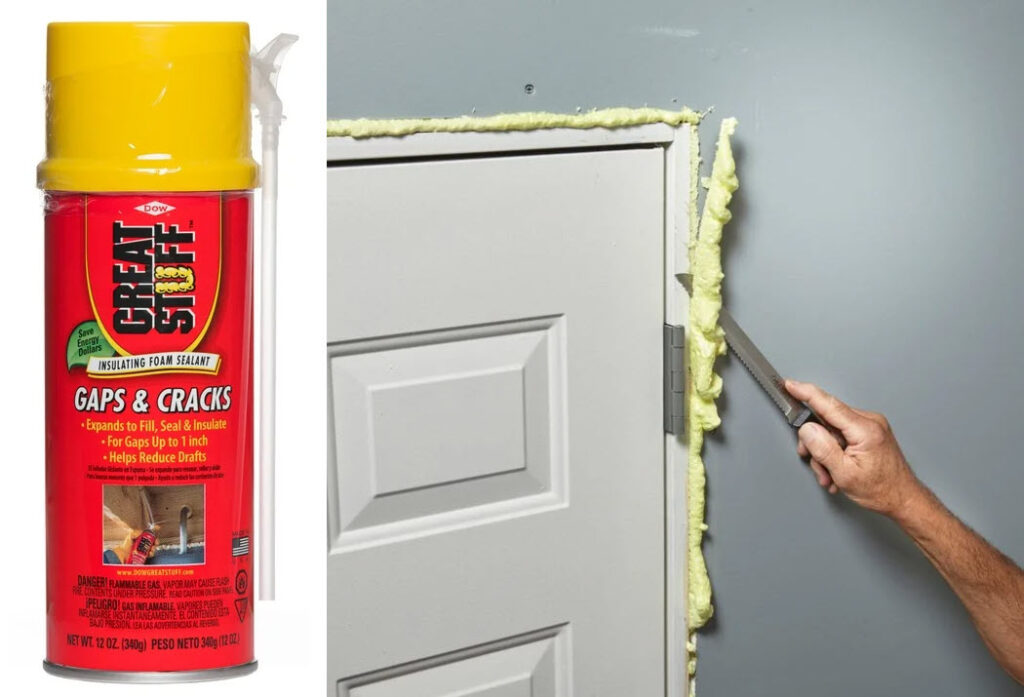
The foam can also drip from the tip and continue to come out after releasing the pressure tip. Place in just enough foam to begin to fill the gap. It will eventually expand to about 3 times the amount foamed in so be careful and frugal. About a day after the foam has dried, as in the photo below, then it can be trimmed back with a sharp knife flush with the surface.
Screen #
Inspect pool enclosures, soffit and window screens for tears/holes
- Prior to patching a torn screen, get the customer’s approval
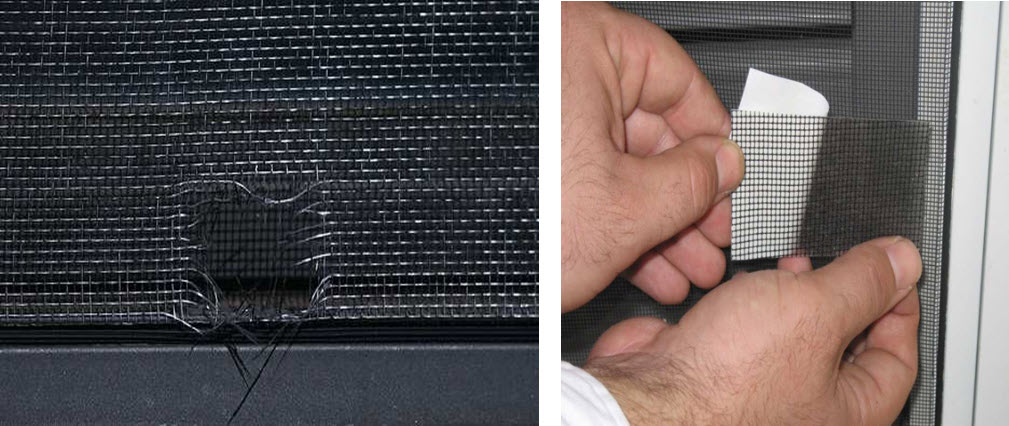
- Make minor repairs by cutting a piece of screening just large enough to cover the damaged area
- Seal the edges with clear silicone sealant
- It is the customer’s responsibility to repair any major tears/holes
Hardware Cloth #
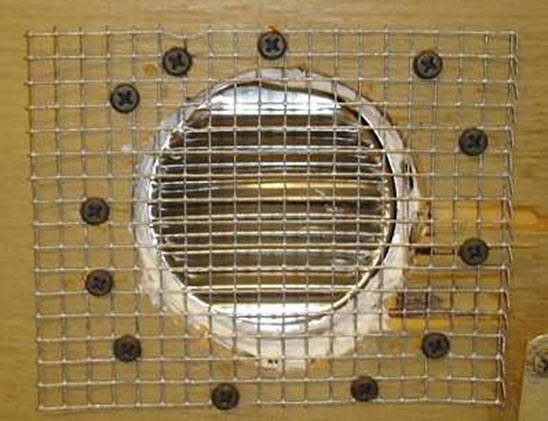
¼ inch galvanized hardware cloth is cut out with tin snips to cover over vents, over holes in wood siding, under eaves, etc. to block out rodents, snakes, frogs, etc.:
- Unroll the cloth to expose a section large enough to cut out the piece needed to cover well over the gap
- Carefully slice a piece of the cloth with tin snips so that the cloth will cover the gap
- Staple-gun or screw the cloth over the gap if it’s wood
- Use liquid nail if the gap is a metal vent, metal siding, or cement gap
Copper Stuf-Fit #
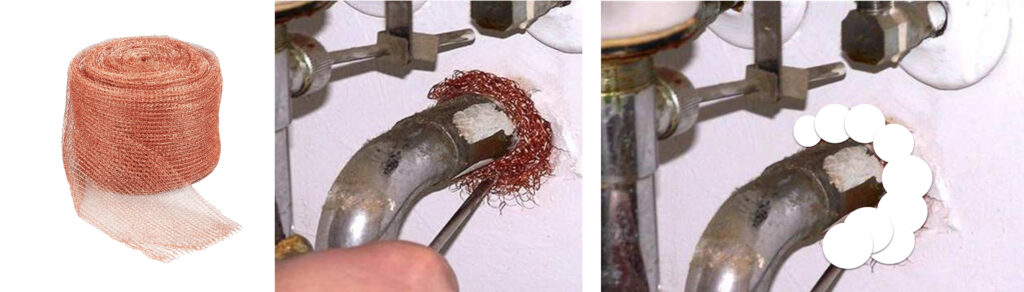
Stuf-Fit comes in a large roll of copper mesh material that can be cut or torn to fill holes and gaps larger than those that can be caulked but smaller than those that need foaming, typically about 1 inch by 3-4 inches. Firmly press bunched up pieces to fill into the gaps and press them in firmly with a screwdriver or hammer handle until it is flat across the gap.
When possible, foam over the copper mesh and trim edges.
Tiers of Exclusion #
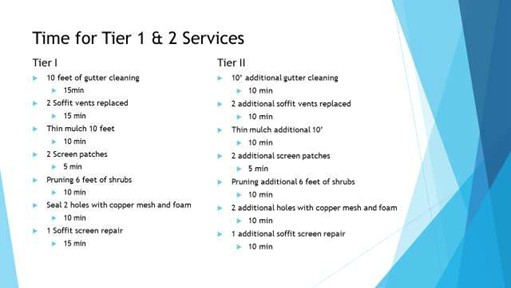
- Tier 1- Included with Initial & Regular services within allotted time frame
- Tier 2- When the above exclusion work takes additional time
- Tier 3- Exclusion that we do not normally provide but which specially trained Techs or Managers can provide
- Tier 4- Exclusion Massey can generally provide using a subcontractor
What Is Tier 3? #
Items that are not normally performed as part of the Initial Service or Quarterly Service, requiring specialized training that enhances the performance of Pest Prevention.
- Rodent Exclusion – Metal screening, flashing, cementing, expandable foam
- Bird and Bat Exclusion – Bird Barrier, screening, bat netting, expandable foaming
- Insect Exclusion – Weep hole covers, foaming, Leaf Defier installation
- Moisture Management – Dryer vents, vapor barriers, foundation “Temp” vents