Introduction #
The casemaking clothes moth, Tinea pellionella, is a small, destructive pest known for its distinctive silk case and quiet habits. Though tiny, its larvae can cause significant damage to fabrics, rugs, and other materials made from animal fibers. Understanding how it lives, feeds, and hides is essential for accurate identification, inspection, and control.
Identification #
The larvae of the casemaking clothes moth create protective silken cases that are cigar-shaped. These cases are typically found in cracks and crevices, not in the infested material itself. When inspecting, always check around doors and air ducts, as larvae often retreat to these darker, quieter areas.
The larvae primarily attack materials of animal origin such as:
- Feathers
- Wool
- Felt
- Taxidermy mounts
- Natural hide products
Adult moths do not feed, which means that the damage is caused entirely by the larval stage.
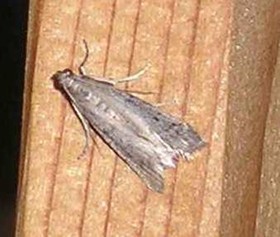 Adult casemaking clothes moth resting on wood surface.
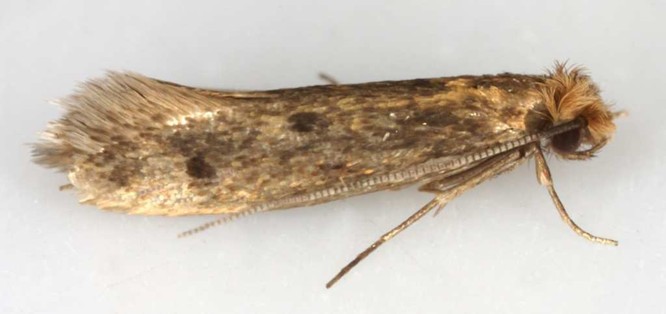 Close-up of adult moth showing scale texture and distinctive wing posture.
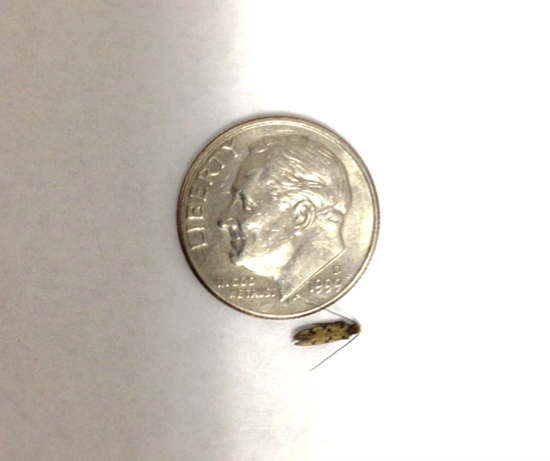 Actual size comparison: adult moth next to a dime.
 Adult moth laying eggs on wool fibers; eggs hatch near the food source.
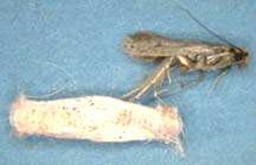 Adult moth and its larval case side by side. The larva constructs its protective case from nearby material.
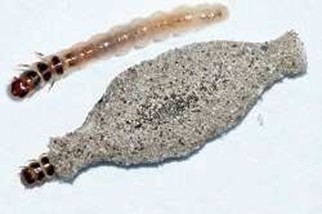 Household Casebearer looks very different from the casemaking moth. Don’t confuse them!
Biology #
The adult female moth mates soon after emerging and begins laying eggs the very next day. In her short lifespan of 3 to 8 days, she can lay up to 83 eggs, often on woolens or other animal-based fabrics.
The larval stage lasts 1 to 3 months, during which the larvae molt up to 11 times before forming a pupa. The pupal stage lasts 9 to 19 days, and the entire life cycle is completed in 1.5 to 4 months.
The moth itself is very small—less than the size of a dime—but capable of significant damage when left unchecked.
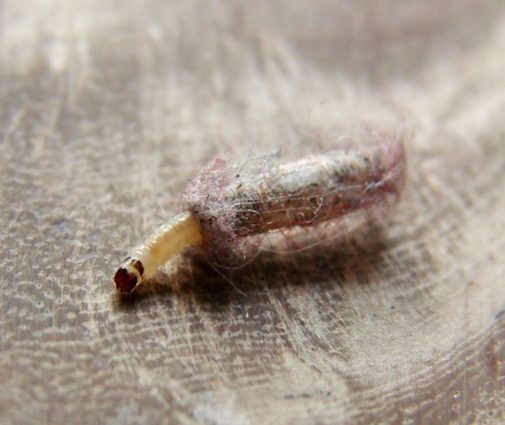 Larva inside its portable silken case. The case is cigar-shaped and blends with surrounding fibers.
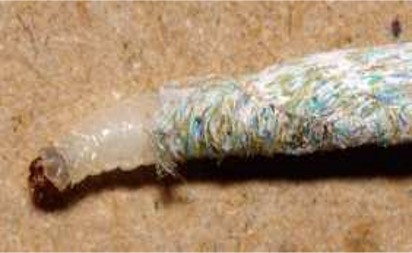 Larva emerging from its silk case woven from fabric fibers.
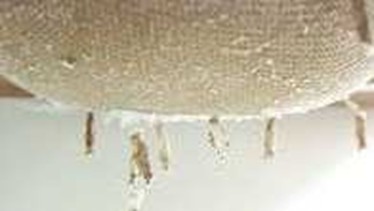 Larval cases hanging from beneath fabric, typical of upward-climbing larvae.
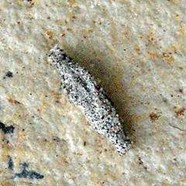 Don’t confuse with casebearer moth pupa!
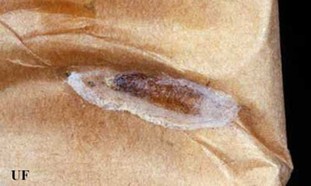 Don’t confuse with an Indianmeal moth pupa!
Habits #
Casemaking clothes moths are secretive and prefer dark, undisturbed places. The larvae feed on a wide variety of materials:
- Animal-based materials: feathers, wool, rugs, fur, taxidermy mounts, piano felt, and pet fur.
- Plant-based materials: tobacco, herbs, and nuts.
Adult moths avoid light and will often fly down chimneys, hiding in dark areas of the home such as under sofas or inside closets.
Females often lay eggs along the edges of natural fiber carpets, where the larvae crawl underneath to begin feeding and creating their protective cases. These cases are made of silk and match the color of the material being eaten, serving as camouflage and an important diagnostic clue.
Larvae spin webbed material around their bodies for protection, and inspection will often reveal small, colored droppings resembling drywood termite pellets. These are typically found under carpet edges, on the floor below, or in small piles near feeding sites.
Unlike many other moths, casemaking clothes moth larvae will climb upward, sometimes hanging from furniture or the ceiling near their feeding site.
Inspection #
Effective inspection begins with understanding where to look and what to expect. Always look for hanging clothes moth cases, especially beneath furniture or on ceilings above suspected areas.
Technicians should also:
- Inspect pianos (particularly the felt components).
- Examine woolens and natural fiber carpets, especially the perimeter edges.
- Always issue a “Fast Facts” sheet on moths whenever natural fiber carpets are present, even if no moths are found.
- Ensure the customer vacuums all natural fiber carpets weekly, including the underside where possible. These carpets should be cleaned and mothproofed annually.
- Encourage the customer to dry clean all woolens and store them in zippered plastic suit bags for protection.
Additional Inspection Notes #
- Pet hair often provides food and harborage. Inspect and ensure it is cleaned up:
- Around baseboards.
- Under large pieces of furniture.
- Inside floor-mounted heater or air vents.
- Closets should be checked for woolens, felt, and other natural materials.
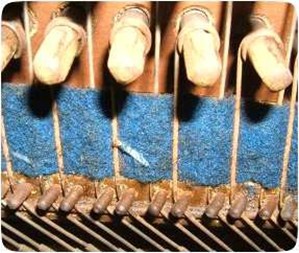 Feeding damage and webbing on blue piano felt lining.
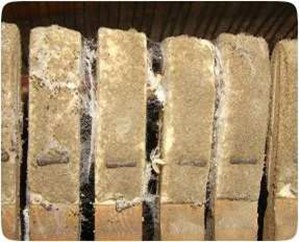 Casemaking moth webbing and feeding damage on piano felt.
 Feeding damage along the edge of a natural fiber carpet.
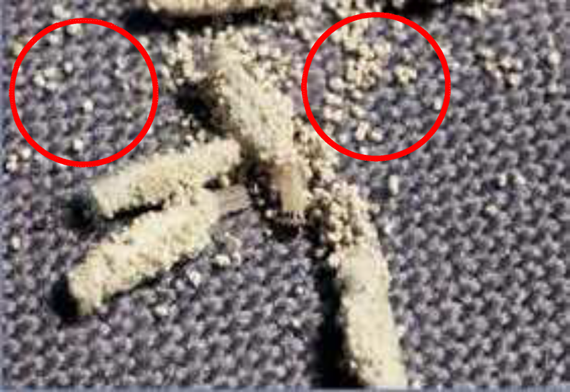 Larval cases and frass (circled) on carpet surface; droppings resemble drywood termite pellets.
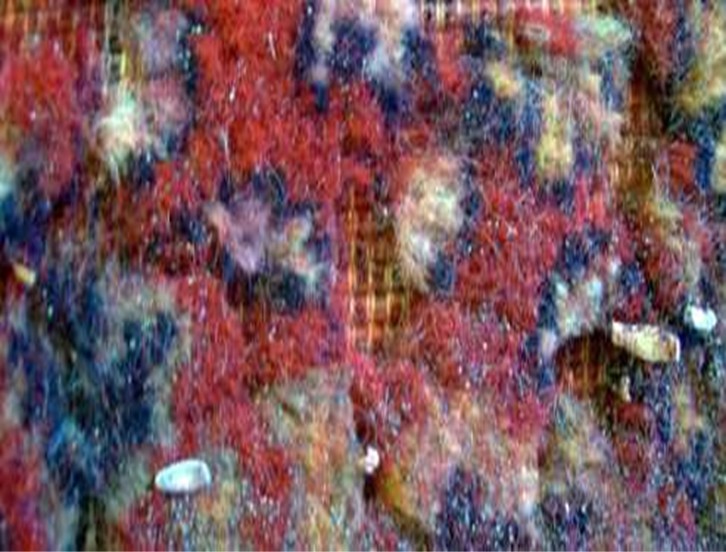 Multiple larvae and cases feeding on wool carpet backing.
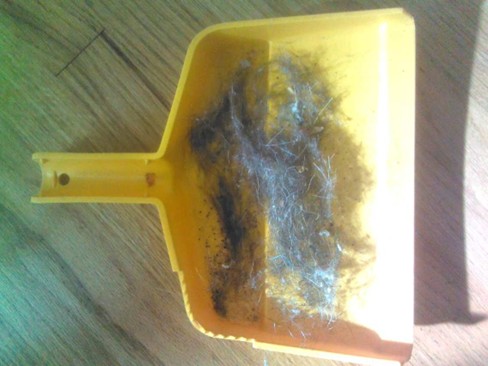 Pet hair and debris collected from a dustpan—common hidden food source.
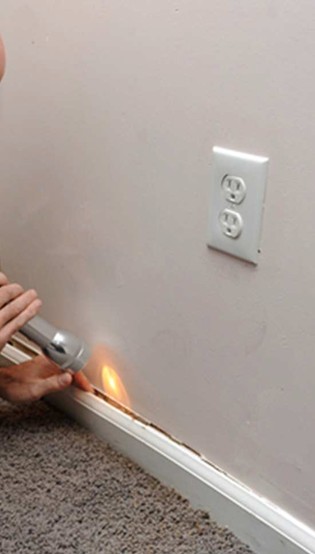 Technician inspecting baseboards and carpet edge with flashlight to locate larvae and frass.
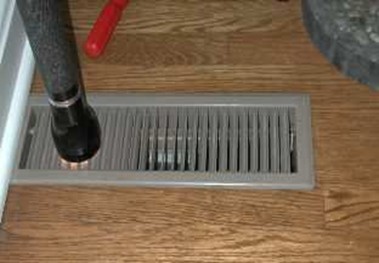 Floor vent inspection for hidden moth cases and debris.
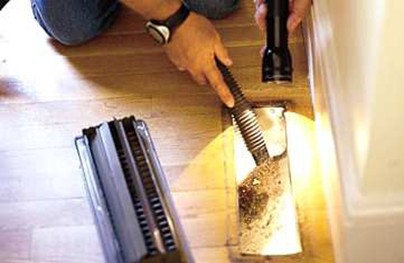 Vacuuming out air vents to remove accumulated dust and pet hair.
Prior to Treatment #
Before treatment begins, ensure your diagnosis is correct. Casemaking clothes moths can be mistaken for other types of moths or for non-pest damage.
Key identifiers include:
- Cases hang freely below surfaces.
- Cases are cylindrical, not flattened.
- Cases are colored like the material eaten, not plaster-colored.
- No visible chrysalis is seen inside the case.
Facts About Clothing Damage #
Not all damage to clothing is caused by pests. Physical or chemical factors may create similar effects:
- Front-loading washers have been implicated in higher rates of fabric wear.
- Pre-treatments such as “Shout” or similar products can weaken fibers.
- Heavy use of high-efficiency (HE) detergents.
- Mixing metal or zippered items with delicate cottons.
- Exposure to battery acid or caustic cleaners.
- Large name tag pins or coat hangers that poke holes in shirts.
These sources should be ruled out before confirming an active moth infestation.
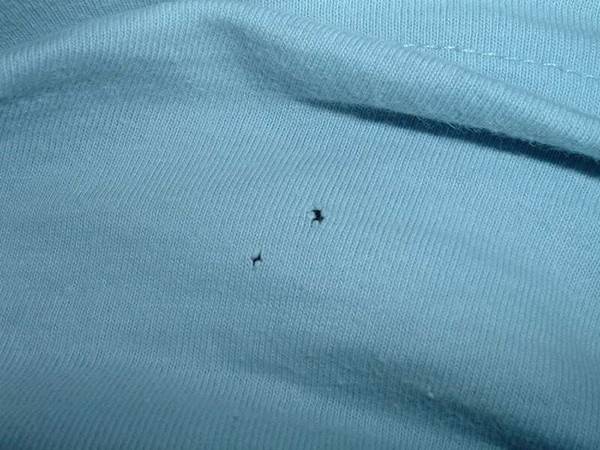 Damage to clothes from clothes hangers.
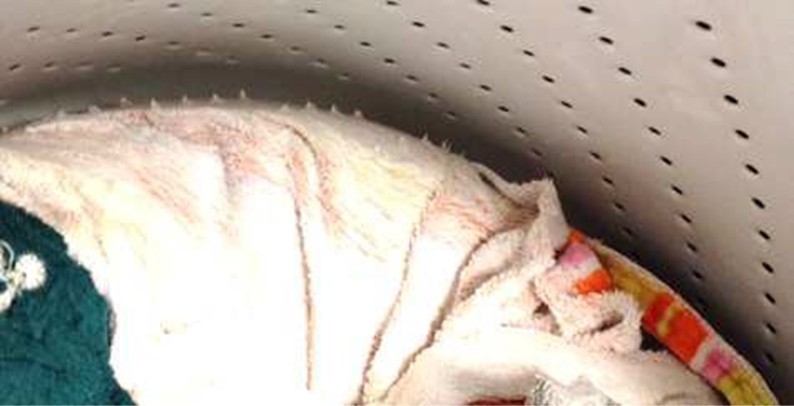 Damage to clothes from washing machine not the moth.
Treatment Preparation #
When clothes moths are found, follow these recommendations before treatment:
- Remove infested items and carpets from the home.
- Take them to be cleaned and mothproofed.
- In Central Florida, Jim Rowland Carpet & Tile (407-252-7222) can clean on-site.
- Vacuum under all furniture, open cabinets, and ceilings to remove cases and debris.
- Vacuum all areas thoroughly, especially around baseboards and where pet hair or wool dust accumulates.
Massey’s Treatment Program #
Massey’s casemaking clothes moth treatment is a 90-day service program designed to eliminate active populations and prevent recurrence—provided the customer follows all recommendations.
Program Highlights #
- 90-day control guarantee if recommendations are followed.
- Initial residual spot and crack/crevice treatment.
- Placement of pheromone traps for ongoing monitoring.
- Proactive inspections every 10–14 days until trap catches are 0 or +1 for two consecutive inspections.
Treatment Steps #
The customer must first prepare according to their Fast Facts sheet.
Technicians will then:
- Apply a spot and crack/crevice residual treatment following the indoor residual rotation chart.
- Treat cracks, crevices, and areas under baseboards and furniture.
- Do not treat oriental carpets or entire floor surfaces.
- Place pheromone traps the same day treatment is applied.
- The program concludes when no more than one moth is caught in a 20–28-day period.
If Trap Counts Increase #
If traps continue to catch moths, a hidden source may still exist. Possible sources include:
- Air ducts or attic areas.
- Chimney openings.
- Accumulations of pet hair or debris in inaccessible areas.
Pheromone Trapping #
Pheromone traps are a vital part of the treatment and monitoring process.
- Use IL-120-10 Webbing Clothes Moth Kits, which also work for casemaking clothes moths.
- Place one lure in the center of each trap.
- Traps catch only male moths and should be used for population monitoring.
- Placement: one trap per 1,000 square feet.
- Inspection: every 10–14 days.
- Maintenance: date each trap, record total moths caught, and replace when counts become unmanageable.
Each trap costs $13 and lasts up to 6 months, though it may require replacement sooner if filled.
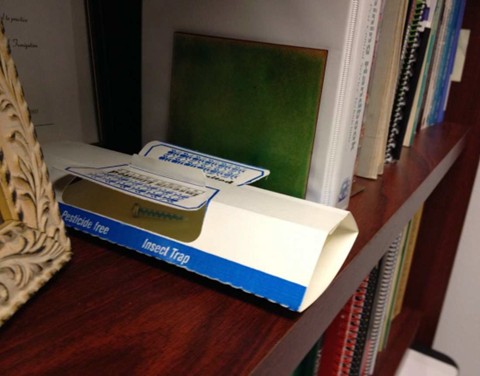 Monitoring pheromone trap placed along bookshelf for male moth capture.
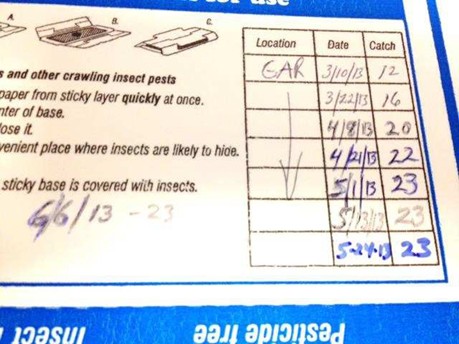 Inspection log on pheromone trap showing recorded catch data and monitoring notes.
Charges #
- Service charges are based on time and materials.
- Add $13 per trap for pheromone monitoring.
Main Takeaways #
- Always provide a Fast Facts sheet when natural fiber carpets, pianos, or woolens are present.
- Infestations may be inaccessible, such as in attics, chimneys, or voids under insulation.
- Rule out attic or chimney sources through monitoring.
- Always charge $13 per monitoring trap placed.
Keys to Control #
Effective management of the casemaking clothes moth depends on accurate identification and consistent prevention.
- Confirm the species before treatment.
- Conduct a thorough inspection of potential harborage sites.
- Seal fireplace flumes to prevent moths from entering from bird nests.
- Recommend dry cleaning infested materials to kill all life stages.
- Store clean woolens in sealed, zippered plastic bags.
- Have oriental carpets mothproofed by a local carpet cleaner.
- Vacuum regularly, especially around baseboards and under furniture.
- Use pheromone traps to monitor male activity.
- For prevention, vacuum both sides of oriental carpets weekly.