Introduction #
The prevention and removal of rodent activity from our customers’ structures and facilities is a significant part of our commitment to our customers. Most of our effort to fulfill this commitment is focused on three areas:
- Exclusion
- Exterior monitoring and baiting
- Perimeter monitoring and baiting
Some customers, such as commercial food processing facilities, require the placement of interior traps as monitors of rodent activity. For most non-commercial customers the placement of interior traps is not a required preventive measure. As a corrective action rodent traps are to be placed in buildings where rodents are active inside.
The rodents we encounter most often are referred to as commensal, meaning that they live with man. They take advantage of our shelter, food and water but provide no apparent return benefit. In fact their presence may lead to structural damage or health concerns for building occupants. The species are house mouse, roof rat and Norway rat. Each species has different biological and behavior tendencies which will direct your prevention strategies and corrective actions.
Understanding the biology of the rodent species is critical to designing the preventative program or to successfully remove an existing population. Most significant for us is the relatively short times required for these animals to develop to sexual maturity and produce young. Not being successful in removing even one mated pair of rats or mice sets the stage for a small population to become significant in a very short time.
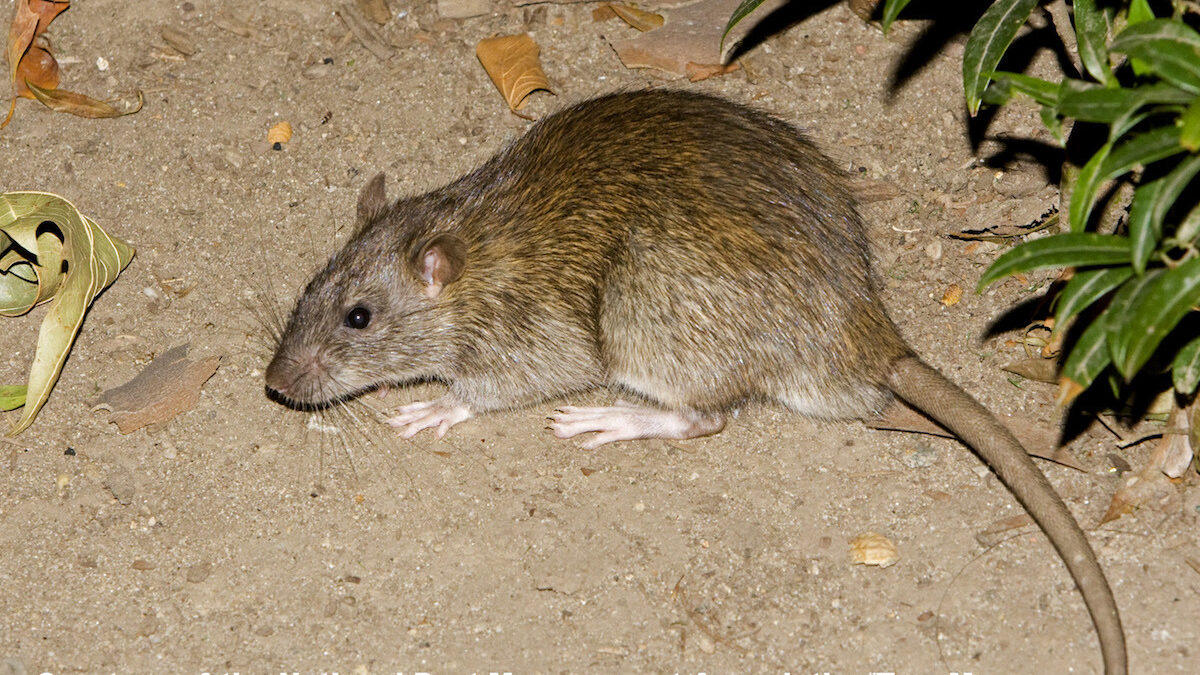
Norway Rat #
(Rattus Norvegicus)
- Body: thick, 7-10 inches, average weight 7-17 ounces
- Color: gray/brown, may vary from gray to black, belly is light colored
- Tail: shorter than the body and the head, 6 to 8 inches, dark on top light on bottom
- Ears: close to the body
- Eyes: small, poor eyesight, color blind,
- Droppings: blunt ends, ¾ inch long or less
- Sexual Maturity: Reached in 2-3 months
- Gestation Period: 23 days
- Number Per Litter: 6-12 per litter
- Number Of Litters: Average 4-7 per year
- Daily Food: 1 oz. Food
- Water Consumption: 1 oz. Water
- Life Span: 18 Months
Behavior Tendencies: Norway rats originated from central Asia. They are primarily ground dwellers with a typical travel range of 90 feet away from their harborage. They are capable of building extensive borrows for harborage as well as shelter against predators. In natural settings the borrows will be found within access of a water source, often near creeks, streams, etc. Food preferences include nuts, berries, and plant seeds. Of the rodents we work with Norway rats are most likely to be considered predators as they will feed on insects, birds, other mammals (including carrion) and reptiles.
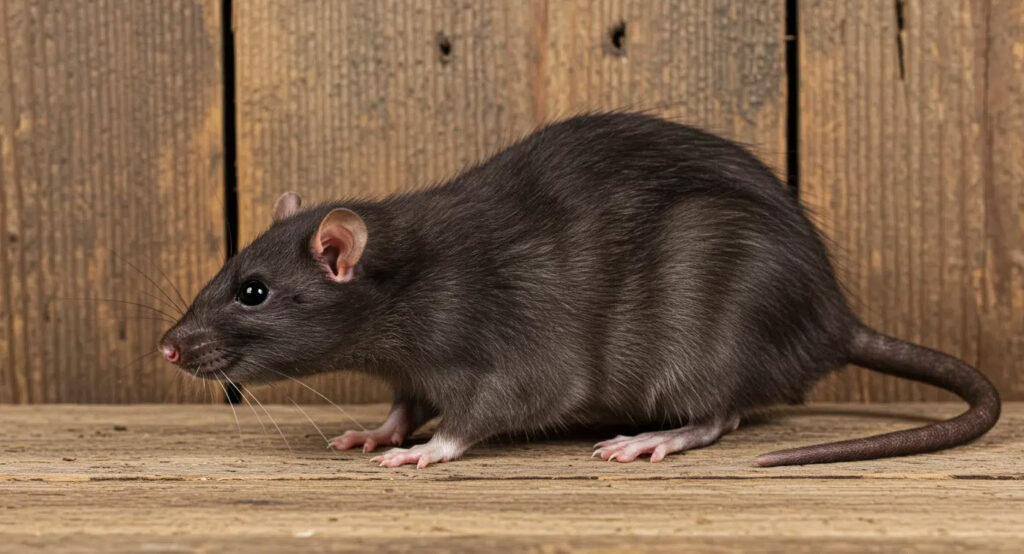
Roof Rat #
(Rattus Rattus)
- Body: slender, 6 ½ – 8 inches, average weight 6-12 ounces
- Color: black to grey/brown, belly is grey to white
- Tail: hairless and longer than body, 7 to 10 inches
- Ears: large, will cover eyes when bent forward
- Eyes: large, poor eyesight, color blind,
- Droppings: pointed ends, ½ inch long or less
- Sexual Maturity: Reached in 2-3 months
- Gestation Period: 22 days
- Number Per Litter: 6-8 per litter
- Number Of Litters: Average 4-6 per year
- Daily Food: 1 oz. Food
- Water Consumption: 1 oz. Water
- Life Span: 18 Months
Behavior Tendencies: Roof rats originated from southeast Asia. Their habitat is in the tree canopy of jungle areas. Food preferences match this arboreal environment as roof rats are attracted to fruits, nuts and seeds. Their behaviors are similar to those of squirrels and will travel up to 300 feet away from the nesting point in search of resources. Within structures roof rats are most often found harboring in elevated areas (attics, drop ceilings, warehouse rack systems, etc.) and foraging down for food and water.
Common Rat Behaviors: Both Norway and roof rats species have some very definite relational characteristics. Each are very protective of the family colony. Intruders even from the same species will be driven away or killed. There is definitely no positive interaction between the different species. You may find a structure with roof rats living up high and Norway rats living down low and competing for the same food and water resources, but you will not find them occupying the same space. Colony mates are identified by scent.
Both species of rats have very poor vision, seeing only in shades of black and white. While they do not see specific shapes at distances greater than 10 feet they are able to perceive movement outside that range. Rodents have very strong senses of smell and hearing.
In most natural settings rats would be considered prey. Many of their behaviors are adaptions which would enhance the rat’s survival. Being primarily nocturnal, wary of new structures or changes in the environment (neophobic), utilizing concealed travel paths, borrowing, and elevated nesting are all actions related to enhancing survival. These behaviors will also be evident in populations that have made their way indoors.
In the natural setting the travel range will be limited to the distance required to locate the required resources. Likewise within structures, rats will take advantage of the first available food source and may develop preferences to those food items. Rats require a source of water, locating this source can be valuable in establishing a trapping program.
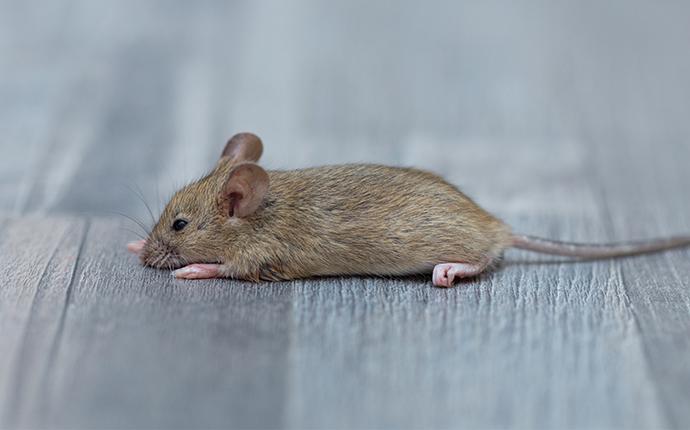
House Mouse #
(Mus Musculus)
- Body: small and slender, 2 -3 ½ inches long
- Color: gray/brown, light belly
- Tail: 3-4 inches long, longer than head and body
- Ears: large for body size, hear very well
- Eyes: small, can recognize objects up to 10 feet away
- Droppings: pointed ends, ¼ inch long or less
- Sexual Maturity: Reached in 1 month
- Gestation Period: 19 days
- Number Per Litter: 5-6 per litter
- Number Of Litters: Average 8 per year
- Daily Food: 1/10 oz. Food
- Water Consumption: 1/20 oz. Water
- Life Span: 15-18 Months
Behavior Tendencies: The house mouse originated in central Asia. These small mammals borrow under tree roots other solid structures to create shelter. Mice primarily feed on seeds and grasses, nibbling small amounts as they move from one location to the next. The typical travel range is 30 feet away from the nesting point. Mice will readily seek other mice and will follow scent/pheromone trails left by mice from other colonies. New objects in the environment will be cautiously investigated. Mice are not required to seek out water if their food sources have high enough moisture content.
The young of all three commensal rodents develop attractions to food scents from scraps in their mothers furs and flavors in her milk. If the mother is attracted a particular food, when the young leave to forage on their own they will be attracted to the food scents they are familiar with first. Feeding preferences may change as they age or as food sources change. Mature neophobic rats will be attracted to foods they are accustomed to.
Pheromones are present in the oils in the fur, as well as urine and feces of rodents. Their sense of smell is very keen and these scents will identify and attract colony mates. Droppings or urine residue placed on glue boards and snap traps can enhance the performance of these tools.
Massey Services Pest Prevention Program – Rodent Prevention Protocol #
Whether it is a commercial or consumer setting Massey Services basic commitment to rodent prevention is exactly the same. The Sales Inspector or Account Manager provides a property line to property line inspection to identify areas that have or are conducive of pest pressure. This included rodents. Recognizing Conditions that exist on the neighboring properties is also an important action. When the technician arrives to start the Pest Prevention Service an inspection must be completed before any services are begun. Both inspections will reveal:
- Exclusionary needs on the structure
- Cracks and spaces where exterior doors do not seal correctly.
- Cracks and spaces where doors in exterior areas (such as garages) do not seal correctly.
- Openings in exterior walls.
- Openings on roofs and other elevated areas.
- Openings into crawl spaces and other sub-surface areas.
- Structure Exterior
- Conditions conducive to pest/rodent activity
- Sources (harborage) of pest/rodent activity
- Perimeter Area
- Conditions conducive to pest/rodent activity
- Sources (harborage) of pest/rodent activity
The first part of our service will be to modify the environment to 1) prevent the pest/rodents from entering the structure and 2) remove the harborage, food and water sources that would attract the pests/rodents. In situations where there are significant structural issues or large quantities of debris providing shelter, the customer will be required to take corrective actions in addition to our efforts. Our exclusionary services include holes up to 2 inches in diameter and/or cracks up to 3/8th of an inch wide. More extensive exclusionary services can be provided at additional charge to the customer following the current rate card based upon service time and materials used.
After the environmental modifications have been made, there may still be a need to place trapping stations or rodenticide bait stations around the structure exterior. The Bell Labs’ Protecta EVO Rodent Bait Station or the VM Products EZ Secure Bait Station are the rodent stations of choice for Massey Services. These are EPA certified tamper resistant bait stations.
Rodenticide bait is further secured in 2 ways. First we use bait block formed with a mixture of food grains containing active ingredients and paraffin wax placed over metal rods which attach to the interior of the bait station. This prevents the bait from falling out of the bait station if it is turned over. Secondly, both bait stations have built in locking mechanisms requiring a key to open and access the bait.
Rodenticide baits blend food products and active ingredients. Manufacturers research acceptance levels of different blends of food products (typically grains) to identify the combinations of ingredients that are most attractive to the target species. Active ingredient (toxicant) is added to the final blend. Some baits are more attractive to mice than rats and vise versa. Attraction to bait can be affected by preferences developed by the food present in the environment. The mixture of food and active ingredient can be packaged and sold in a variety of forms; whole & chopped grains, grains and active ingredient molded into blocks with paraffin wax, ground food and active ingredient molded into pellets. To help assure baits remain inside the bait stations bait blocks are the form utilized by Massey Services.
There are a variety of bait products used by Massey Services. The most commonly used rodenticides are Generation and Contract. These anticoagulant baits are effective maintenance products. The active ingredients prevent healing of breaks in the rodents circulatory system. Ultimately, affected rodents die from internal blood loss within 3-4 days after consuming a lethal dose. Fast Track bait, which is also an anticoagulant, is an option when a quicker drop in population is required. Other baits and tracking powders are potential solutions for extreme rodent issues. The use of these products requires notification and approval of a Technical Director or V.P. of Quality Assurance.
An added ingredient in all rodenticide baits is the product, Bitrex. Bitrex is a highly bitter substance that does not deter rodent feeding, but is extremely distasteful to humans and non- target animals. Humans are very sensitive to Bitrex. Taste testing has determined that people can detect Bitrex in water at 50 parts per billion. Bitrex is aversively bitter at 1 to 10 parts per million (ppm) in water. Most consumer products become bitter at 30 to 100 ppm. The additional of Bitrex helps in preventing accidental ingestion by humans and non-target animals.
The trapping and bait stations should be placed in locations and intervals appropriate for the rodent species expected or identified. Stations near sheltered areas such as dumpsters, storage areas, landscaped areas and mulch beds will be much more effective than stations placed open unprotected areas. Stations placed for mouse monitoring/baiting need to be placed approximately 30 feet apart. Stations for monitoring rats can be placed up to 100 feet apart. In situations where the rodent populations are high, bait stations need to be placed with greater frequency. This will to enhance the opportunity for the rodents to encounter the baits and reduce the population. In food processing and other sensitive accounts it is recommended that trapping stations be placed on either side of exterior doors to trap rodents before they attempt to enter the structure. A trapping station typically consists of a Protecta Bait Station (without rodenticide bait) with a T-Rex Rat Trap placed inside.
The placement of perimeter rodent protection may be required for two reasons: 1) the surrounding properties are harborage and a source for pests/rodents and 2) the customer has a special need for this type of monitoring. An example is USDA Food Processing facilities. The intent of placing perimeter protection is to monitor and intercept rodent activity before the population has the opportunity to encroach on the structure. The need for this can be found in a residential neighborhood as well as a commercial setting.
Curative Service for Rodents #
From time to time the need to take corrective action for rodents is required. The first actions include identifying exterior travel paths and exterior to interior access points. The travel paths will indicate where exterior bait stations and traps should be placed. A sufficient number of bait stations and traps should be placed to impact the total rodent population. When all or the majority of the bait in a station is consumed between service visits; placing a larger volume of bait in each station, more frequent service calls and/or placing more bait stations are each appropriate responses.
To be successful in eliminating an interior population of rodents there are several initial steps that have to be taken.
- Identify the species
- Identify travel paths
- Observe levels of damage and fecal matter to estimate the size of the population
- Identify food and water sources
- Identify sources of nesting materials
From this information establish the location, number and types of rodent traps to be used. When designing the trapping plan consider the species and their particular behaviors and biology in mind. The survival techniques that rodents use in the wild will also be used inside of a structure. Modifying the environment, changing food availability, food selection and restricting movement can hinder or enhance your results. Take actions anticipating the rodents’ response. Use current behaviors to enhance your early trapping success. Place traps baited with current food sources into current travel paths. Sometimes you will have to modify the environment and change current behavior with the goal of restricting movement or attracting the rodent(s) into areas away from the customer or their guests. In these situations, use urine scrapings and fecal pellets to introduce pheromones into the area you wish to attract the population to. The presence of pheromones and family scents will encourage movement into that area. The same technique can be used to lower the perceived threat level (neophobia) of new traps and other equipment.
The use of different types of traps in combination can enhance short term results. With a relatively high, population placing glue boards with commonly found food will result in the capture of juveniles and infirm adults. This occurrence is common, which often leads to the misperception that the task will soon be completed. The awareness and caution levels of these groups of rodents is less pronounced than healthy mature (reproducing) adults. This often results in a drop in population that is replaced over a few weeks by the offspring of the more cautious rodents. Alternating traps that are armed with those that are unarmed can create confidence and behaviors resulting in the mature rodents not being threatened by the unarmed trap which can be armed at a later point.
Behaviors where rodents identify traps as being less or not dangerous can be created. An example would be placing rat glue boards and T-Rex traps into an area with rodent activity. Bait and arm the T-Rex traps. Leave the glueboards paired up so the adhesive is not exposed. Apply pheromones from urine scrapings and fecal pellets to infer that colony mates have contacted the unarmed glue traps. After a few days, and successful trapping on with the T-Rex traps arm the glueboards, by separating them, and place in the rodents travel paths. Bait and disarm the T-Rexs to reduce the perceived threat level from them. As the rodent activity continues, switch back and forth every few days arming and disarming traps. By adding wooden snap traps to the mix a third set of behaviors can be created. Always bait with food sources the rodents are accustomed to and have been feeding on.
Occasionally, changing the established rodent foraging or feeding behavior is required. This can be done by limiting access to one area, exclusion, and baiting a location that is more desirable for placing traps. Once the desired behavior is attained, begin trapping.
As stated earlier, initial trapping efforts can lead to a false impression of success. For this reason any request for rodent activity must be followed on in a very disciplined way. Doing so will allow you to learn from observation, and enhance results by modifying the program. In a situation where one or two rodents enter a structure, are discovered and trapped; just a few service visits may be sufficient. For the vast majority of our rodent service calls the population has become established and more effort is required to remove the entire population. For that reason the Massey Services standard for rodent services requires:
- All requested services for rodent activity will be responded to the day of the request. Meaning we will be on site providing corrective services that day.
- In cases of severe infestation, Proactive follow-up services will be scheduled daily.
- Any Massey Services’ customer experiencing rodent activity will be provided Proactive services a minimum of every Monday – Wednesday – Friday.
- Proactive Services will be discontinued only after three services have been provided which do not result in discovered rodent activity or continued activity reported by the customer.
- After Proactive Services have been discontinued the Service Manager or General Manager will provide a Service Excellence Audit confirming the activity has been resolved.
The first best choice in reducing and eliminating an interior rodent population is to implement and maintain a diverse program utilizing deterrents, traps and exclusion. In rare situations the use of rodenticide materials, liquid or solid baits and/or tracking powder, may be required to eliminate an interior rodent population. The use of these materials inside a customer’s home or business must be approved by the V.P. of Quality Assurance or a Technical Director prior to the placement. These materials must be placed with the utmost care. Liquid and solid baits are to be placed only in secure stations, never into cabinet or structural voids. Tracking powders must be placed to allow us to recover the material completely by placing in PVC tubes or Protecta Stations. The use of baits to address rodents on the interior of a building is never the first choice. Assure rodenticides are stored only in their original containers and label directions are followed regarding use and disposal.
For commercial customers, a Service Log Book is to be placed into the manager or designated contacts’ office. This book will have Log Sheets for the customer’s employees to enter detailed information of rodent sightings. Copies of all the Extra Service and Proactive Service Reports will also be kept in the Log Book. The Service Manager or General Manager will retrieve the Log Book at the time of the Service Excellence Audit.