Introduction #
German cockroaches (Blattella germanica) are small, fast-reproducing indoor roaches found most often in kitchens, bathrooms, and areas with consistent moisture and heat.
Identification #
Adult German cockroaches are approximately 5/8 inch long and light brown to gold in color with two dark longitudinal stripes on the pronotum. They have fully developed wings, but do not fly.
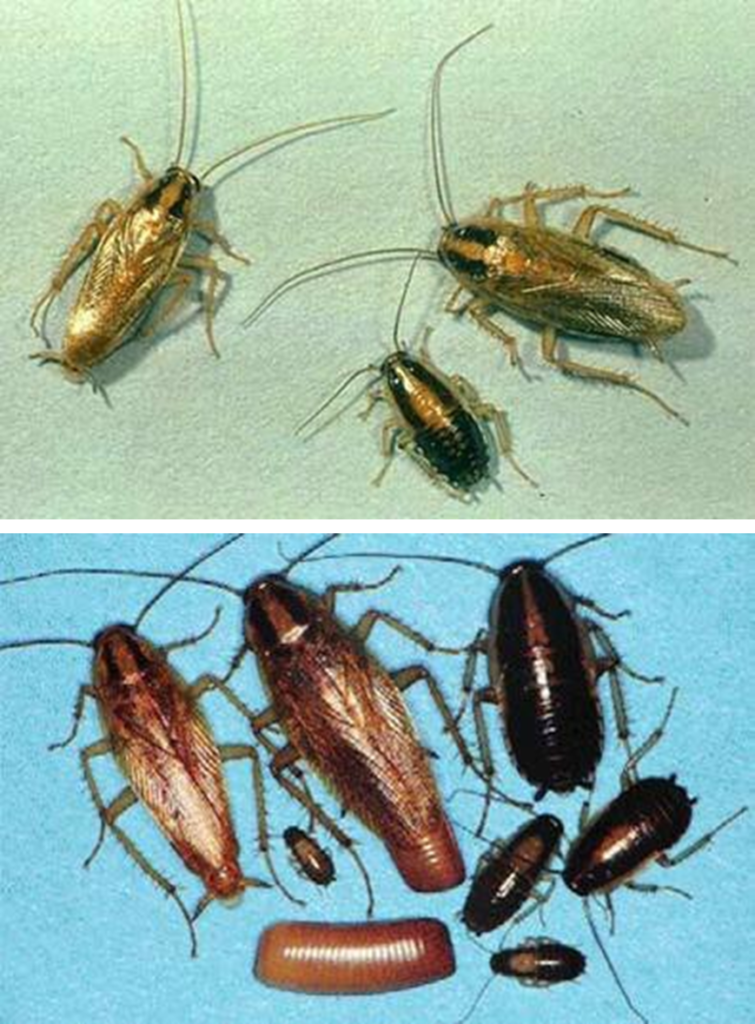
Due to their short maturation time (103 days from egg to adult) and high reproductive capabilities, German cockroaches are the most successful and most prolific of the roach species that live indoors. Unlike other cockroach species, German cockroach females carry their ootheca until the young nymph’s hatch. Each ootheca holds on average
30-40 viable eggs.
German cockroaches are the most common cockroach pest found in homes, restaurants, grocery stores, apartments, and other buildings. They are transported easily in clothing, bags, boxes, and other belongings, allowing populations to become quickly established in new locations. They prefer warm areas with high humidity, are active at night. They are commonly found in kitchens near dishwashers, sinks, refrigerators, and stoves. Once population increase you can find activity in any room. During the day they hide in cracks and crevices that provide them with a suitable harborage.
German cockroaches are an aesthetic nuisance, carry diseases and produce large amounts of fecal material. They have a very unpleasant characteristic odor which becomes quite prevalent in large populations.
MF German Cockroach Cleanout Procedure #
CLEANOUT PROTOCOL #
German cockroach cleanout involves a multi-step process that includes both non-chemical and chemical methods. The steps consist of inspection, correcting sanitation issues, physical removal, material
application, exclusion, monitoring, and follow-up.
Service technician should have the proper PPEs, tools, application equipment’s, and materials for cleanout.
PPE #
The recommended PPE includes:
- Knee pads
- Respirator or dusk mask
- Gloves
- Long-sleeve shirt and pants
TOOLS #
Service technicians should have a tool bag or kit to carry necessary tools and materials, including:
- Screwdrivers (both Phillips and flat head)
- Cordless drill with drill bits
- Caulk gun with caulk
- Vacuum
APPLICATION EQUIPMENT #
Service technicians should be equipped with:
- Hand duster (either a bellow or a Centro bulb)
- Bait gun
MATERIALS #
Service technicians must carry materials from Rotation Chart including gel bait, granule and Insect Detection Traps (IDTs). They should also carry MicroFlow Insect bait.
PREP INSTRUCTION #
Prior to treatment for German cockroaches, refer to and review the Consumer Service Checklist for German Cockroaches. Note sanitation issues specific to the residence that will receive the German roach service and review with the Property Manager. The property will deliver the checklist and discuss with resident. This checklist is designed to focus on sanitation. Dead insects and fecal matter should be cleaned prior treatment for best success of service.
INSPECTION #
Using a flashlight, conduct a thorough inspection to identify sanitation issues and potential German cockroach harborage sites. During the inspection, count the number of cockroaches trapped in all Insect Detection Traps (IDTs) within the residence for material application.
German cockroaches can be found in, but not limited to, rooms where food is stored and where people eat. The inspection zones include:
- Kitchen: This area is particularly important due to easy access to food, water, and shelter for German cockroaches. Begin your inspection in the kitchen, systematically moving around and checking the following areas for signs of activity:
- Cabinets, microwaves, behind electrical outlet covers, baseboards, and drawers.
- Under and on the back of refrigerators, in and around stoves, and under the sink.
- Pantries, kitchen appliances, knife blocks, under and around sinks.
- Dining room: Check under tables, chairs, and Bakers’ rack or credenza.
- Living room: Check both around and beneath furniture, as well as underneath televisions.
- Bedrooms & closets: Check under and around the bed frame, nightstand, dresser, and television.
- Bathroom and laundry rooms: Check for gaps around the plumbing pipes entering the wall.
- Check around doors, hinges, and trim.
- The presence of live cockroaches, fecal matter, cast skin, and empty egg cases can help identify harborage sites.
SANITATION #
Sanitation is a crucial part of managing German cockroach services. It requires both our efforts to identify and document the issues and the residents’ commitment to addressing them. While sanitation problems shouldn’t hinder our success, they can prolong the duration of treatments. It’s important to communicate any sanitation concerns to the Property Manager. Here are recommendations to create an environment that is less inviting to German cockroaches:
- Avoid leaving behind food items in areas where food is prepared and consumed.
- Leftover food
- Unwashed dishes
- Spilled food
- Eliminate as many moisture sources as possible by repairing leaking pipes.
- Assure that trash is regularly removed from residence.
- Keep all opened boxes of food in tightly sealed containers.
- Eliminate piles of grocery bags, paper goods, old clothes, magazines, etc. as these are excellent harborage areas.
- Only provide pets enough food for one meal at a time. Spilled and unconsumed pet foods are attractive to cockroaches.
- Insulate pipes to prevent condensation, and do not leave water standing on counters or in the sink.
PHYSICAL REMOVAL #
Using a HEPA-filtered vacuum, remove both dead and live German cockroaches, as well as cast skins, egg cases, and minor food debris discovered during your inspection. The benefits of vacuuming include:
- An immediate reduction in the population, providing the customer with visible results from your treatment.
- Removal of competing food sources which will make our bait more attractive.
MATERIAL APPLICATION #
The new cleanout protocol will include the use of bait, dust/MicroFlow bait material and granules. We will not be using any actisol with pyrethrin products to flush out roaches instead rely on MicroFlow bait material to get to the areas where cockroaches will be hiding including the harborage sites. The amount of bait and dust/MicroFlow Insect Bait applied in the cleanout process will depend on the cockroach activity (total number caught on all IDTs in the unit or total amount seen during the cleanout inspection or total number from both options) in the infested residence.
DUST/MICROFLOW INSECT BAIT #
Where to apply:
Apply to areas of harborage (voids/cracks and crevices) to eliminate pest populations and in areas of potential harborage to prevent any future activity. The areas include:
- Behind cracks and crevices in the baseboards.
- Opening leading into wall void areas specially under the sinks and electrical outlets.
- Under and on the sides of the dishwasher and stove.
- Cabinet void areas.
How much to apply:
- Low Infestation – 1 to 50 roaches use 0.2 to 1 OZ per 100 sq.ft.
- Medium Infestation – 51 to 100 roaches use 0.2 to 1 OZ per 100 sq.ft.
- High Infestation – >101 roaches use 1 to 1.8 OZ per 100 sq.ft.
GEL BAIT #
Where to apply:
Bait contains food attractants and active ingredients that when consumed, will cause the insect to die. Baits should be applied in locations conducive for cockroach activity and areas with cockroach activity including:
- Behind refrigerator
- On the back of microwave
- Cabinets and around door hinges
- In all living area of the residence where there is evidence of cockroaches including bedroom, dining room, and living room.
Bait Placement Technique:
- Apply bait in small spots or beads-like according to the manufacturer’s label.
- Multiple placements of small volumes of bait are more advantageous than lesser large placements.
- With large populations, more bait placements will have to be made to reach results.
- Ensure that people or pets cannot contact the bait placement.
How much to apply:
- Low Infestation – 1 to 50 roaches use ¼ of the tube (a7.5 grams).
- Medium Infestation – 51 to 100 roaches use ½ tube (15 grams).
- High Infestation – >101 roaches use 1 tube (30 grams).
GRANULE #
- Use granules bait to deliver added food source in addition to the gel bait.
- Place IDTs coated with Granules or place them in an insect bait station and place them under and behind kitchen and laundry appliances.
- Other label-approved areas with cockroach activity, ensuring that people or pets cannot contact the station.
EXCLUSION: #
In multi-family structures, recommend that the property management seal void openings or caulk and seal gaps after our treatment. Document all observations and recommendations in the call log.
MONITORING: #
Place IDTs in the following area:
- kitchen sink
- the bathroom sink
- the pantry
- Any other areas of concern or activity
Using insect detection traps will help identify areas with ongoing activity. IDTs also allow us to assess the effectiveness of our treatment and determine the next steps. The information we can gather from the IDTs includes:
- Various stages caught on the IDT after cleanout can show areas where treatment may have been missed.
- The presence of first- or second-instar nymphs can indicate proximity to the harborage site.
- Cockroaches caught on one side of the traps can help identify the direction of their harborage area.
Additionally, check for insect activity on the IDTs with granules placed under and behind kitchen and laundry appliances on the follow-up visit.
FOLLOW-UP: #
During the next scheduled service (weekly visit), inspect all areas, including activity on the IDT and locations where the residence has reported activity. As a best practice, replace the IDT with German cockroaches on it.
- Retreat, as necessary.